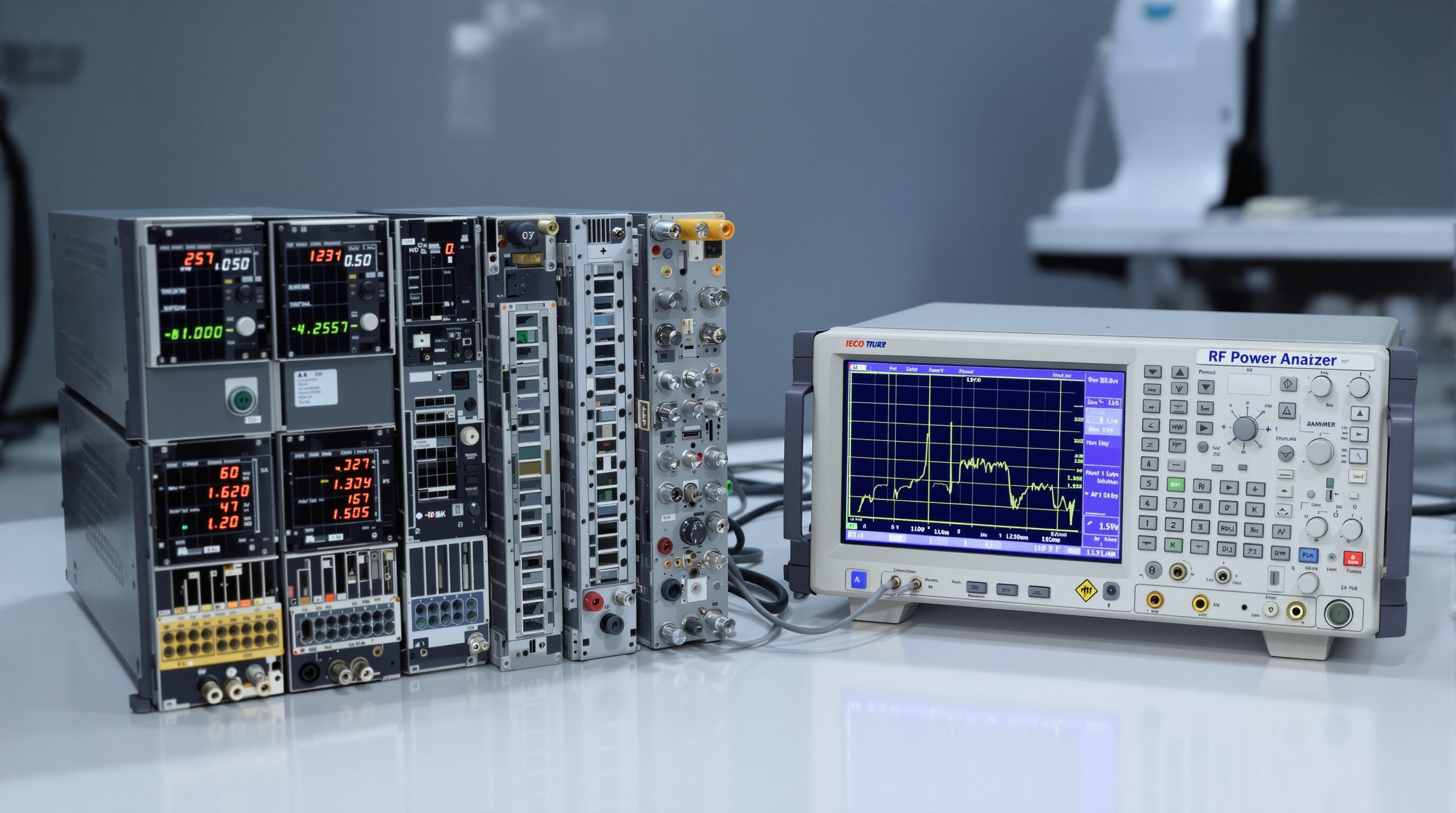
For RF power amplifiers to work properly with jammer systems, they need to match up with the right operational frequencies so we don't waste energy or create unwanted interference. According to some field tests from 2023, when amplifiers covered the range of 1.7 to 4.2 GHz instead of just narrow bands, they actually cut down power usage by around 18% without messing up the signal quality (as reported by Dewinjammer in their 2023 study). When there's a mismatch between these frequency ranges though, problems happen. Critical areas where threats might appear stay completely unprotected, or worse yet, signals spill over into neighboring channels which could really mess things up during actual electronic warfare operations.
Modern jammers must simultaneously disrupt signals across GPS (1.2/1.5 GHz), cellular (700 MHz–4 GHz), and Wi-Fi (2.4/5 GHz), requiring bandwidths exceeding 500 MHz. Wideband RF power amplifiers based on GaN semiconductor technology deliver >50 dB gain across octave-spanning ranges, enabling a single amplifier to replace multiple narrowband units without sacrificing performance.
Tunable amplifiers capable of producing 30 dBm output across frequencies ranging from 800 MHz all the way up to 4 GHz are now being used effectively by military personnel against threats like GPS guided drones and those pesky 5G enabled IEDs. When looking at how these systems perform, they maintain a VSWR below 2.5:1 at important spots on the spectrum such as 2.3 GHz which covers LTE signals and 3.5 GHz where 5G n78 operates. What this shows is pretty clear actually - wideband amplifiers offer excellent protection against multiple types of threats without sacrificing any kind of performance quality along the way.
To successfully jam signals, amplifiers need to put out more power than what's coming in from the target device. Take commercial drones as an example most hobbyist jammers struggle with these things unless they can generate around 50 watts of continuous wave power just to mess with GPS signals. Military applications are even tougher sometimes needing over 300 watts to shut down those long distance communication links. The problem gets worse when pushing higher outputs because heat builds up fast. That's why many professionals turn to gallium nitride based amplifiers these days. They handle the heat better and stay stable without distorting signals too badly, which matters a lot during those intense operations where reliability counts.
When amplifiers work in nonlinear mode, they create those pesky harmonic distortions plus intermodulation products which messes up how accurate the jamming actually is. If we run these amplifiers just below their 1 dB compression point though, something interesting happens the spectral regrowth drops about 65 percent according to some research from IEEE back in 2024. This matters a lot when dealing with overlapping frequency bands such as what we see between 4G and 5G networks. Keeping things this way means the jamming power stays directed at whatever it needs to stop, instead of accidentally covering up legitimate signals that are trying to get through normally.
Maximizing output power often reduces efficiency by 30–40% due to heat buildup. Advanced designs mitigate this using adaptive biasing and Doherty configurations, achieving 80% drain efficiency at 150W output. These improvements extend operational endurance, particularly in mobile platforms where cooling capacity is limited.
The Third-Order Intercept Point (IP3) measures an amplifier’s ability to suppress intermodulation distortion when processing multiple signals. In congested spectral environments, amplifiers with IP3 values >40 dBm minimize cross-frequency interference. Industry analyses show that units exceeding 45 dBm IP3 reduce spectral regrowth by 30–50%, enhancing targeting accuracy in multi-threat scenarios.
The 1 dB compression point, known as P1dB, is basically the point at which an amplifier's gain starts to drop off by 1 dB compared to when it operates linearly. When systems run too close to this threshold, they start introducing distortion that can really mess up jamming accuracy. Most engineers know better than to push things right up against the limit. For pulsed signals, good practice suggests staying around 6 to 10 dB below P1dB. With those complicated modulated signals like OFDM though, the safety margin needs to be bigger, somewhere between 10 and 15 dB below P1dB. This extra headroom helps maintain signal quality even when dealing with all sorts of changing load conditions that real world systems face daily.
Headroom the margin between operational power and maximum output, protects against signal surges. In mobile jamming systems, maintaining 3–5 dB of headroom prevents clipping during abrupt transitions while optimizing efficiency. GaN amplifiers offer 20% wider headroom than traditional LDMOS designs, improving resilience in unpredictable operational conditions.
Driving amplifiers into saturation generates uncontrolled harmonics, risking interference in adjacent bands. Staying 2–4 dB below saturation preserves stable gain profiles, crucial for sustained missions. Field data shows adherence to this margin reduces thermal shutdown incidents by 65% in continuous counter-drone operations.
Amplifiers operating near saturation produce harmonics, integer multiples of the fundamental frequency that can disrupt non-target systems. To suppress these, engineers use impedance matching networks and operate 6–10 dB below compression. Advanced linearization techniques further reduce out-of-band emissions by 15–20 dB, ensuring cleaner spectral output in modern jamming platforms.
A 2 dB increase in noise figure reduces jammer sensitivity by 35%, potentially allowing weak threat signals to escape suppression. For counter-drone applications targeting low-power LoRa signals, amplifiers must maintain noise figures below 1.5 dB. Thermal stabilization ensures ±0.2 dB noise figure consistency across -40°C to +55°C, preserving performance in extreme environments.
A three-tier approach ensures signal purity:
Ground plane segmentation prevents harmonic currents from inducing false modulation in power supplies, especially vital in space-constrained vehicular jammer installations.
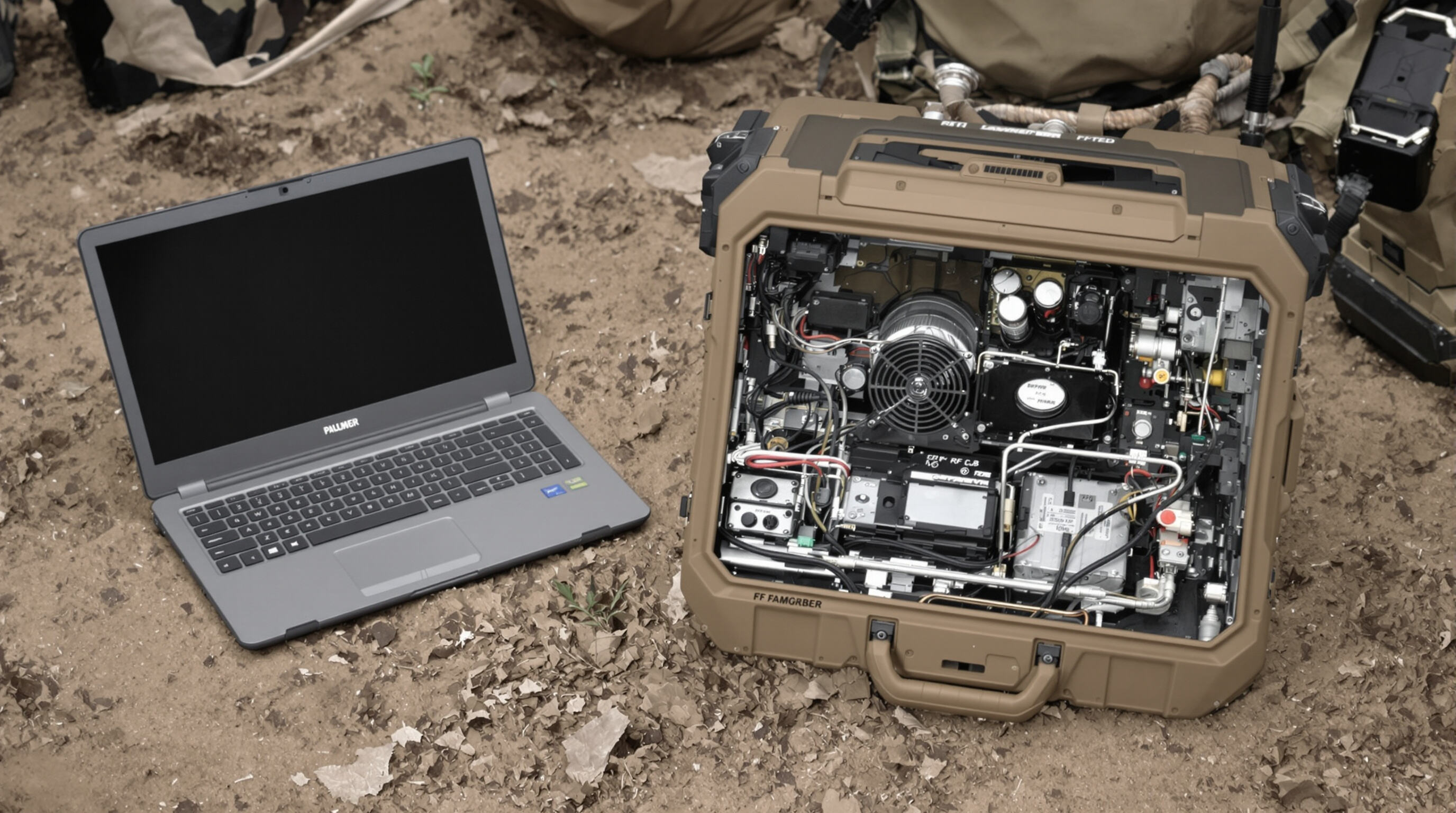
For mobile jamming systems to work properly, they need RF amplifiers that somehow manage to be both powerful and small at the same time while still being efficient. Most engineers talk about something called SWaP-C when designing these systems. That stands for Size, Weight, Power, and Cost. Basically, every little bit matters because adding just a tiny bit more space or power consumption can make all the difference in whether the system actually gets deployed in real world situations. According to a recent report from defense researchers in 2023, almost two thirds of jammer failures happen because the devices overheat or run out of power too quickly compared to what their SWaP specifications allow. This shows how critical proper thermal management really is in these compact systems.
Effective integration requires alignment between RF amplifiers and three core subsystems:
Embedded thermal sensors and active monitoring reduce failure rates by 38% in high-duty-cycle operations. Key strategies include:
These practices ensure RF power amplifiers sustain >90% jamming efficacy over 5,000+ hours in harsh operational environments.
RF power amplifiers need to match operational frequencies and bandwidth to efficiently disrupt target signals without wasting power or causing interference in non-target areas.
Tunable amplifiers offer wide frequency coverage, allowing for effective disruption against various threats such as GPS-guided drones and 5G-enabled devices without compromising performance.
SWaP(Size, Weight, Power, and Cost) is crucial in designing mobile jamming systems, ensuring they are compact, efficient, and capable of sustained operations in field conditions.
Proper thermal management prevents overheating and ensures consistent performance of RF power amplifiers, especially in compact mobile jamming systems.