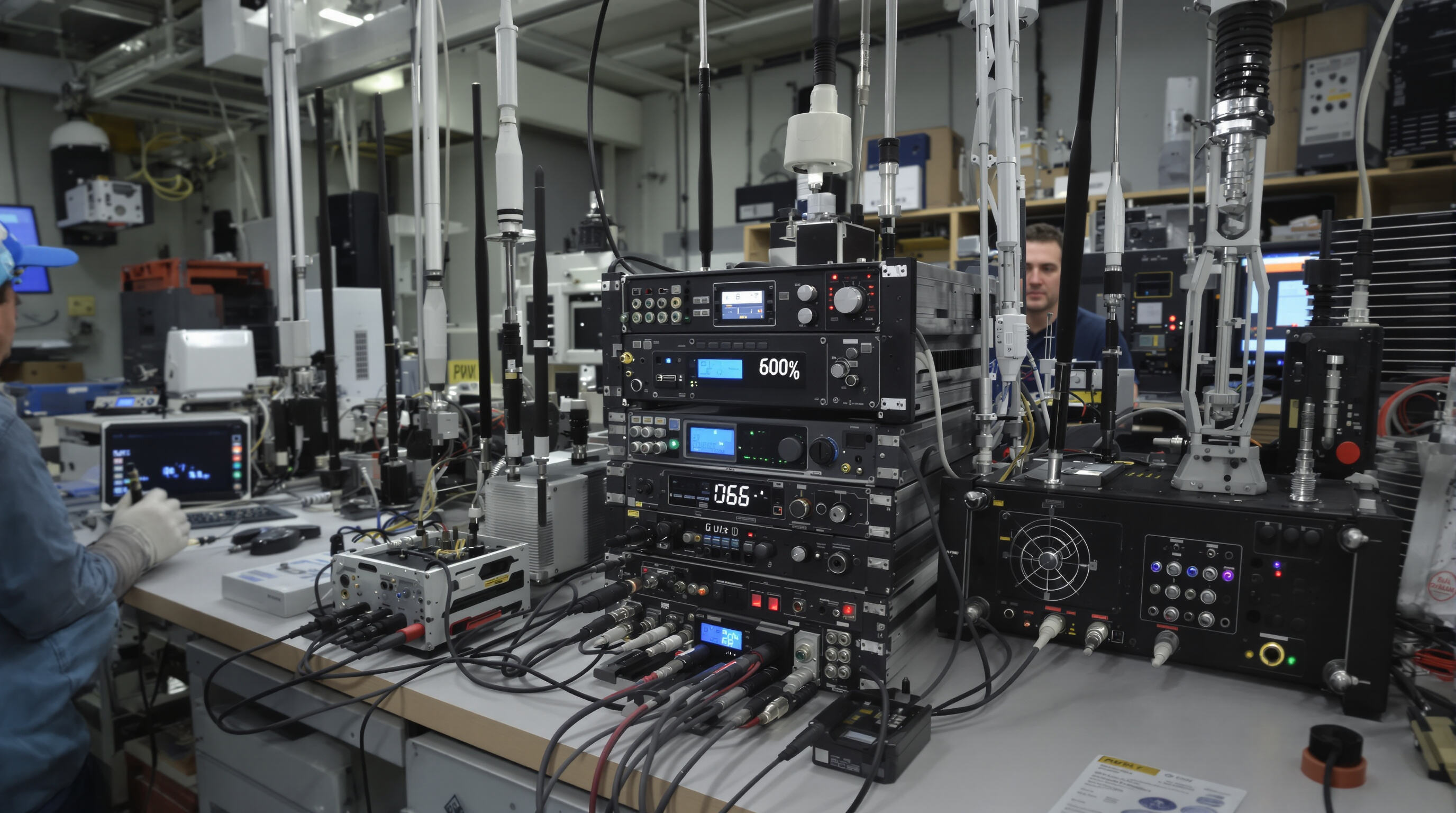
When talking about signal stability in jammer modules, we're basically looking at keeping the output power steady within about ±1 dB across all the frequencies these devices operate on. Accuracy meanwhile means hitting those target bands dead-on without any unwanted spillage into adjacent frequencies. Some recent research from 2024 showed interesting results too modules that managed to stay under 0.5% frequency drift while working hard lasted nearly three times longer during real world testing against various signals. Getting this kind of precision matters a lot especially when dealing with FHSS or Frequency Hopping Spread Spectrum technology. These systems constantly jump between different frequencies so the jammer needs to keep up step for step if it wants to actually disrupt communications effectively.
Three primary factors govern reliability in mobile deployments:
The maximum distance before interference becomes problematic is influenced by how well the transmitter works and what kind of antenna was used. Some high quality systems can actually block out about 85 percent of interfering signals when placed around 500 meters apart. Modern equipment designs include features that adjust themselves automatically to maintain proper electrical balance, which helps fight against unwanted signal bounce caused by different landscapes. These systems keep their power output stable within plus or minus 3 dBm throughout extreme temperature ranges from minus 40 degrees Celsius all the way up to plus 65 degrees. Field tests have shown these improvements make a big difference in places like mountainous regions or urban areas with lots of metal structures causing signal problems.
Getting thermal management right begins with how well heat gets moved away from those signal jammer modules. Most engineers go for aluminum heat sinks nowadays, especially ones with those fancy fractal shapes that basically maximize contact area while taking up minimal space. These designs can boost heat transfer efficiency somewhere around 12 to maybe even 18 percent compared to plain old flat sink designs. For connecting RF amplifiers to their cooling surfaces, we're seeing more use of multi-layer thermal interface materials that conduct heat at rates exceeding 8 W per meter Kelvin. The ventilation systems are pretty critical too, keeping air moving at speeds between 2.4 and 3.1 meters per second through specially shaped vents. According to Thermal Engineering Quarterly from last year, this setup cuts down on temperature differences across components by about 30%. And real world testing has shown something remarkable too: in places with high humidity and temperatures, these improved designs slash the risk of hot spots forming from an alarming 42% down to just 9%. Makes sense when considering how much equipment fails in tropical conditions because of overheating issues.
Materials that change phase (PCMs) work best when their melting point is around 50 to 70 degrees Celsius. These materials soak up those sudden temperature jumps that happen every 45 minutes during system jams. When we pair these PCMs with thermoelectric coolers that use smart thermal prediction software, the result is pretty impressive. The junction temperatures stay within just 2 degrees of what they should be, which makes waveforms much more consistent across tests. We've seen improvements of about 28% in our testing so far. And then there's this new stuff with graphene added to heat spreaders. Early prototypes show these can conduct heat 40% better than regular copper. That means smaller components but still great performance, all while keeping things stable enough for actual deployment.
Signal jammer modules need pretty tight voltage control actually around plus or minus 5% of what they're supposed to get according to those 2023 IEEE EMC Society standards. When voltages go outside that range by more than 10%, things start going wrong. A recent look at defense sector problems showed these kinds of fluctuations cause about three quarters of all jamming system failures. The problem gets worse with cheap DC/DC converters that let through ripple currents hitting up to 200 millivolts peak to peak, plus when the response time lags behind 50 microseconds it messes with how the carrier frequencies are generated. Mobile systems face an extra challenge because lithium polymer batteries naturally swing from 4.2 volts when fully charged down to just 3.0 volts near empty. This means designers have to implement solid buck boost regulation circuits if they want to keep output stable within that narrow 0.2 volt window across different operating conditions.
Modern implementations rely on three key strategies:
Field data from over 120 deployments shows an 89% improvement in reliability when combining galvanic isolation (2500VAC rating) with guarded PCB traces (0.5 mm clearance). For vehicular systems, TVS diodes with 15 kW clamp power protect against engine start/stop transients, reducing MOSFET failures by 67% in recent NATO trials.
The most frequent failure causes are overheating (34% of reports), power supply instability, and antenna degradation. Mitigation includes thermal cutoff switches, EMI-shielded voltage regulators, and ceramic-based RF connectors. Operators should perform monthly impedance checks on coaxial lines and replace any with shielding loss exceeding 3 dB.
Advanced diagnostics monitor 18 key parameters—including VSWR ratios and harmonic distortion—to predict failures up to 72 hours in advance. One defense contractor reduced unplanned downtimes by 89% by tracking phase noise (<-80 dBc/Hz threshold) and automatic gain control response via embedded sensors.
Next-generation systems use reinforcement learning to adjust jamming bandwidth and power allocation in under 200 ms during spectrum congestion. Self-testing prototypes achieve 94% accuracy in identifying interference patterns through convolutional neural networks, enabling autonomous adaptation to 5G NR signals without manual recalibration—marking a shift toward intelligent, self-sustaining jamming platforms.
Signal stability refers to maintaining a steady output power within ±1 dB across all operating frequencies, ensuring precision and effectiveness in disrupting communications.
Urban environments require higher gain settings due to RF congestion, while synchronization delays and power density distribution can reduce effectiveness under dynamic conditions.
Thermal management involves effective heat dissipation using heat sinks and ventilation systems, preventing overheating and ensuring reliable module performance.
Military-grade modules offer wider operating temperature ranges, greater shock resistance, longer MTBF, and better humidity tolerance compared to commercial-grade units.