The number of unauthorized drone flights around critical locations like airports, power stations, and communication hubs has shot up nearly 240% since 2020. People are now really worried about things like stealing trade secrets and damaging important infrastructure. Remember what happened back in 2018 when those mysterious drones shut down Gatwick Airport? Over a thousand flights got canceled that week, and airlines lost around $75 million dealing with all the chaos. These days, modern drones come loaded with cameras or devices that can pick up signals. They can literally scan for weaknesses in security systems, knock out sensors, or even drop something dangerous into restricted areas within just fifteen minutes after getting past basic defenses. It's becoming increasingly clear why so many organizations are scrambling to secure their airspace properly.
The threat landscape keeps getting worse for energy infrastructure. Last year alone saw 43 documented cases of drones flying over US nuclear facilities. Take one big substation on the East Coast where a small quadcopter somehow slipped past security measures and stayed put for nearly half an hour right next to critical transformers. That kind of access opens all sorts of dangerous possibilities from deliberate damage to stealing sensitive information. And it's not just power plants either. Major transportation centers including ports deal with this problem regularly too. Monthly reports show drones being used to drop illegal items into restricted areas or map out cargo configurations to find weaknesses in shipping operations.

| Threat Level | Drone Activity | Potential Impact |
|---|---|---|
| Intentional | Surveillance, explosives delivery | Physical damage, data theft |
| Incidental | Hobbyist flights, navigation errors | Operational disruptions |
| Coordinated | Swarm attacks, cyber-physical hijacking | Systemic infrastructure failure |
Malicious operators increasingly exploit commercial drones modified with open-source software, while 68% of accidental incursions stem from inadequate geofencing. Anti drone systems must adapt to this dual challenge: distinguishing hostile intent from human error while maintaining 24/7 operational readiness.
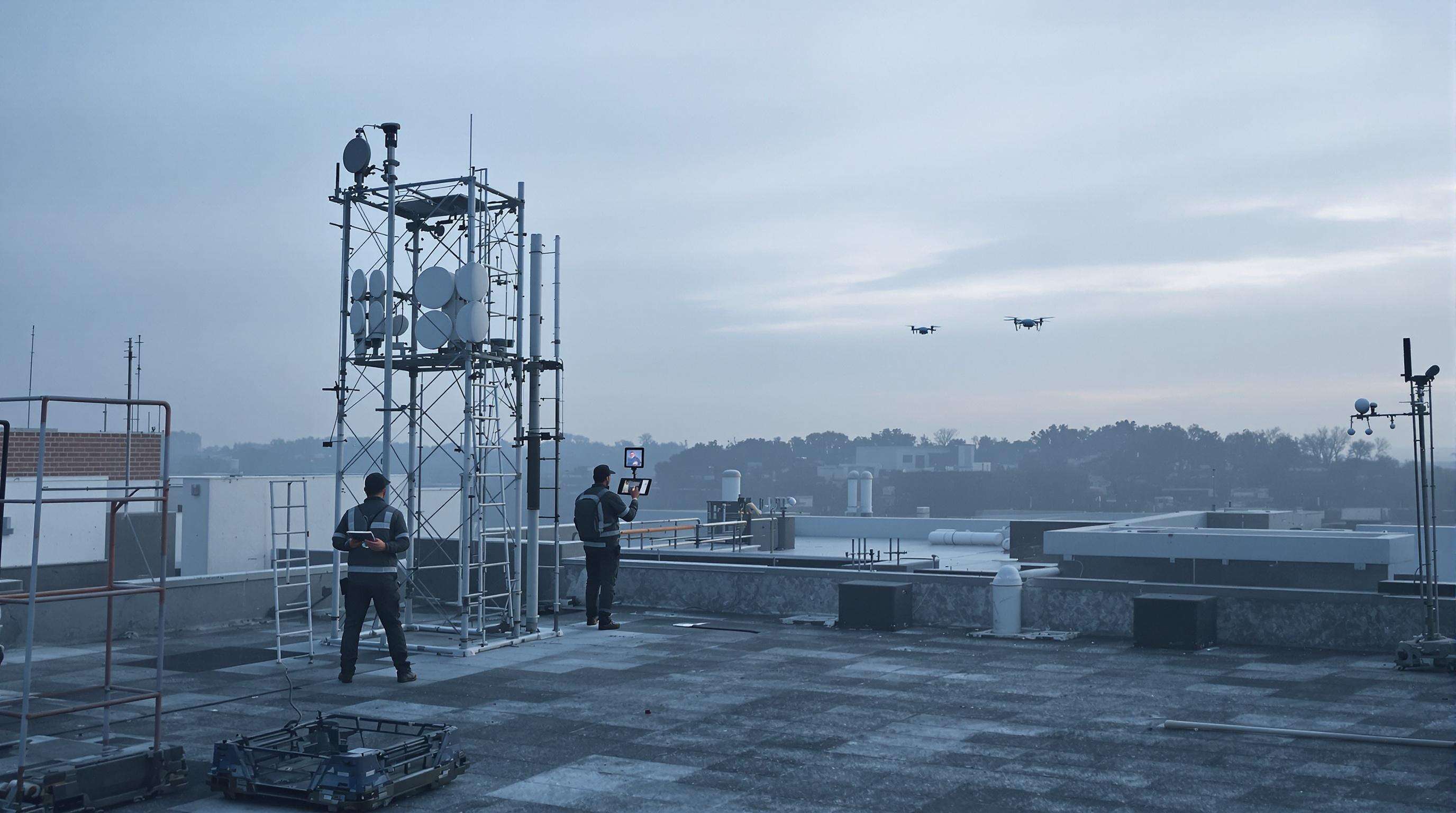
Modern anti drone systems employ multi-layered detection networks to identify threats within seconds of airspace penetration. By combining radio frequency (RF) scanners, radar arrays, and AI-powered analytics, these systems achieve 98% accuracy in classifying unauthorized UAVs according to 2024 defense sector benchmarks.
Early warning capabilities rely on triangulating drone signals across distributed sensors. Systems using multi-spectrum RF analysis can detect commercial drones from 3 miles away, providing security teams 45–90 seconds of response time before potential airspace breaches.
Advanced systems integrate pulsed Doppler radar with directional finding antennas to map flight trajectories in real time. This dual-sensor approach distinguishes hobbyist drones from modified threats by analyzing propulsion signatures and communication frequency hops.
Live threat visualization dashboards convert raw sensor data into actionable intelligence, overlaying drone positions onto 3D facility maps. Security personnel receive automated alerts when UAVs enter restricted zones, enabling coordinated intercept protocols within 15 seconds of detection.
FAA data reveals 90% of unauthorized drone incidents occur within 5 miles of critical infrastructure, underscoring the need for perimeter-focused detection architectures.
Today's anti-drone defenses rely on electronic countermeasures (ECM) as a way to stop potential threats without actually shooting them down. The ECM tech works by messing with how drones talk to their controllers. It does this through various methods including sending out radio frequency interference, cutting off control signals from operators, and even messing up GPS so the drone gets lost. Some really good ECM setups go further and take over the drone's internal commands completely, making it either land where it is or fly back home. According to research published last year by experts at the Defense Science Board, places that implemented these kinds of measures saw about an 80% drop in illegal drone activity around sensitive areas.
Non-kinetic methods prioritize safety by disabling drones through cyber-kinetic means:
These techniques minimize collateral damage, making them ideal for urban environments. According to Dronelife, 74% of critical infrastructure operators prefer non-kinetic systems for their reversibility and compliance with federal airspace regulations.
Non-lethal methods reduce liability risks by avoiding debris from downed drones, which account for 34% of insurance claims in security incidents. They also align with evolving legislation: current U.S. law permits only authorized federal agencies to deploy kinetic countermeasures in most scenarios.
Kinetic systems like net guns, drone interceptors, and directed energy weapons tend to come into play only when things get really dangerous and someone needs to be physically stopped right away. A lot of military installations have started deploying lasers against enemy drones loaded with explosives lately. Field testing shows pretty good results too around 98 percent effectiveness according to what we've seen so far. Still there are serious concerns about how permanent damage can be once these systems go off. That's why there's all this extra regulation surrounding them, especially after Congress passed those new rules in the National Defense Authorization Act last year.
Today's anti-drone tech works hand in hand with main security control rooms so folks can see threats as they happen and respond together when needed. The systems send all their information to central screens where security personnel can look at drone warnings right next to everything else going on around the facility. A recent study from last year showed that this kind of connected approach cuts down response time somewhere between 15 to maybe 30 seconds over older, standalone systems. That might not sound like much but in high stakes situations every second counts for preventing problems before they escalate.
Getting good results from drone defense means these systems need to work well with older equipment that's already in place. Modern solutions connect to existing CCTV cameras so operators can actually see what's happening when drones are detected. They also set off alarms around protected areas whenever unknown flying devices enter restricted spaces. Plus, they pass along suspicious activity information to computer security programs that look for signs someone might be trying to hack into networks. When companies use multiple detection methods together like radio frequency sensors, traditional radar, and visual monitoring systems, tests have found that mistakes in identifying real threats drop by about 92%. This combination works best in places where different technologies are already operating side by side.
Take for example what happened at one busy European airport recently when they put together a new defense system against drones. They hooked up their anti-drone tech with the regular air traffic control stuff plus all the security systems around the terminals. When drones showed up unexpectedly, planes would automatically get rerouted away from trouble spots. The stats are pretty impressive too – over the course of almost two years, there were 47 times when drones tried to enter restricted airspace, but none actually caused problems because the system caught them early. According to that big aviation security report from 2024, airports that install these kinds of systems see about half the workload on their security teams since most threats get verified automatically now.
Modern defense systems are starting to use AI technology to analyze information from various sensors at once. This has made it about 40 percent better at telling apart bad drones from harmless things such as birds flying around or those big weather balloons we sometimes see in the sky. The machine learning models behind these systems have been fed data from well over half a million different flight paths. They spot potential threats anywhere between 8 to maybe even 12 seconds earlier compared to older rule based approaches. That extra time allows for quicker responses without having to completely overhaul what's already in place across most facilities today.
Organizations reduce response times to unauthorized drone activity by 65% when implementing unified counter-UAS (Counter-Unmanned Aircraft Systems) protocols. These procedures establish escalation matrices for threat severity levels, synchronize communication between airspace monitoring teams and ground personnel, and define rules of engagement for signal jamming or kinetic interception.
Modern training programs simulate drone swarm attacks, GPS spoofing scenarios, and low-altitude incursions using augmented reality modules. Certification standards like the C-UAS Operator Proficiency Framework require 120+ hours of hands-on practice with radar tracking interfaces and frequency analyzers. Teams trained in multi-sensor fusion show 92% faster target classification versus basic programs.
Stealthy drones are taking advantage of gaps in 5G coverage right now, and according to recent studies around three quarters of countries haven't actually put down solid rules about how to stop these unmanned aircraft. What this means is that security personnel who disable dangerous drones face serious legal problems, even if they're trying to protect critical infrastructure like power stations or nuclear facilities. The Federal Aviation Administration has come up with something called a Drone Defense Operator License which they hope will sort things out by the middle of next decade. But here's the thing nobody seems to mention much these days: actual drone attacks keep happening faster than lawmakers can catch up. We've seen several cases where policies were still being drafted while incidents were already occurring in the field.