
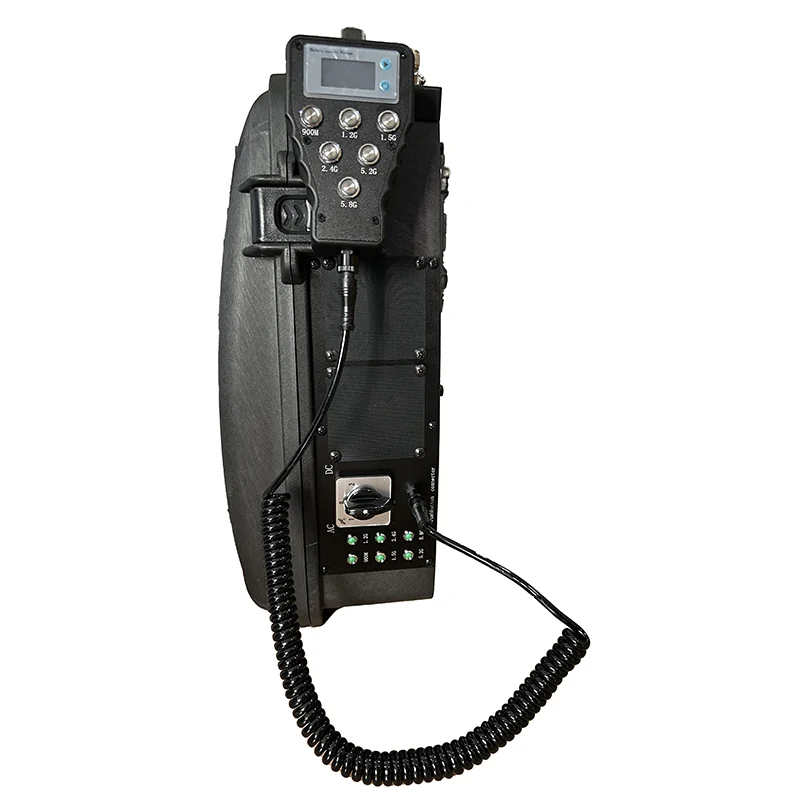
An anti drone facility is a coordinated set of detection, decision and countermeasure equipment that protects a fixed site from unauthorized UAV activity. Airports, substations, prisons, stadiums and industrial parks all face the same problem: consumer drones are cheap, easy to fly and hard to see with the naked eye. For teams planning low altitude security, the real question is which components modern anti drone systems need on site, from RF jamming transmitters to the sensing layer, and how the parts interact before a purchase order is signed.
Detection always comes first, because a threat you cannot see is a threat you cannot stop. A drone detection system is the sensory core of the site, and it usually combines passive RF spectrum scanning with radar or electro-optical confirmation. Passive spectrum sensors listen for the control and video signals that drones emit, covering bands from roughly 70 MHz up to 6 GHz, while networked detection units extend coverage to 3-10 km and share target positions across multiple nodes. For low altitude security planning, the detection layer should deliver three outputs: an alert, a bearing, and an identified drone model or protocol fingerprint.
Most anti drone systems rely on radio-frequency denial as the primary response because it is reversible, scalable and fast. A fixed jamming unit transmits interference across the bands drones use for satellite navigation, remote control and video transmission, typically 900 MHz, 1.2 GHz, 1.5 GHz, 2.4 GHz, 5.2 GHz and 5.8 GHz. Channelized designs deliver around 50 W per channel so operators can suppress one band or all bands at once. Modern units respond within about three seconds of a confirmed threat, which matters because a drone crossing a 2 km perimeter at speed leaves a defender less than a minute of margin. Outdoor fixed units should carry IP66 protection and support continuous duty in the site climate.
Sensors and transmitters are only useful if someone can interpret them quickly. The software layer fuses inputs from every drone detection system on site, classifies targets, displays them on an electronic map, and raises alarms through sound, light and on-screen prompts. Clear identification is what turns raw signals into low altitude security decisions. Mature anti drone systems add protocol decoding, which identifies the drone type and sometimes the pilot position, giving security teams evidence as well as awareness. When evaluating suppliers, ask how many targets the platform tracks at once and whether it exposes an open interface to your existing security management system.
A security integrator responsible for a logistics park installed a networked detection layer first, then added a 32-channel directional jamming array covering four cardinal directions. During a verification drill, the RF jamming array forced unauthorized drones to land from several approach angles at ranges beyond 2 km, while the software logged each intrusion path for the incident report, strengthening the park's low altitude security posture. The staged rollout worked because each layer, from the drone detection system to the transmitters, was tested independently before integration. That is the deployment pattern most buyers of anti drone systems should copy: prove detection first, then layer countermeasures on top of validated data.
Before signing a contract for an anti drone facility, verify five things in writing. First, detection range measured in your actual RF environment, not in a vendor demonstration field. Second, frequency coverage and whether bands are customizable, since modified FPV drones often use uncommon frequencies such as 433 MHz or 1.2 GHz. Third, jamming response time and the effective suppression radius. Fourth, environmental protection, including IP66 enclosures and operating temperature ranges that match your climate. Fifth, support services: commissioning, operator training, spare parts and ODM or OEM customization for unusual site layouts.
Not every site needs the full stack on day one. A low-risk industrial yard may only need spectrum detection and alerts, while an airport or a prison requires the complete chain from the drone detection system through RF jamming to evidence logging. Tiering low altitude security investment this way keeps budgets defensible and leaves room to expand. Whatever the tier, the components of a working anti drone facility stay the same: sense, decide, respond and record. Suppliers of anti drone systems that can demonstrate all four layers with testable numbers are the ones that survive a pilot project and earn the multi-site rollout.
How much area can one anti drone facility cover?
Coverage depends on the detection layer. A single networked node can monitor a radius of 3-10 km under favorable conditions, and multiple nodes extend both range and positioning accuracy. Jamming radius is typically shorter, around 2-3 km, so coverage planning should always start from the drone detection system specification rather than the marketing headline.
Will RF jamming disrupt legitimate communications nearby?
Modern anti drone systems use directional antennas and independent channel control, so an operator can activate only the bands a target drone is using. This limits collateral interference with Wi-Fi, radio and cellular traffic, though low altitude security sites near airports should still coordinate frequency plans with local authorities before going live.
Can an anti drone facility be expanded in stages?
Yes, and it is the recommended approach. Start with a drone detection system and the software platform, validate alert quality for one or two months, then add RF jamming units matched to the threats you actually recorded. This sequence protects both the budget and the operational learning curve of your security team.


